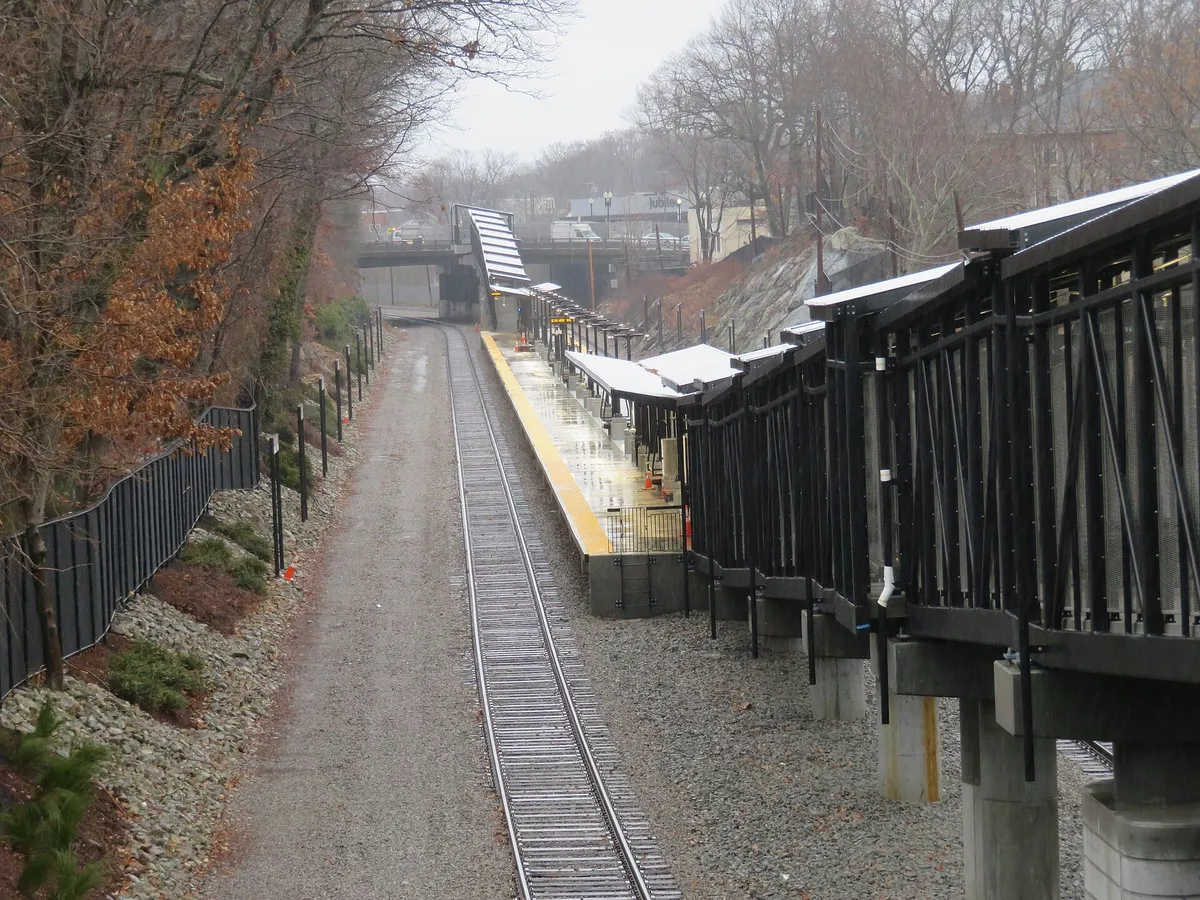
Mattapan's Cummins Highway rebuild cuts drivers going 35 mph or faster to 7 percent
By The Boston Digest
Far fewer drivers are hitting 35 mph or faster on Cummins Highway in Mattapan since Boston finished a $28 million rebuild of the street this fall.
Back in 2018, 30 percent of drivers on the road reached 35 mph or more. By 2026, city data gathered after construction put the share at 7 percent.
Boston pinned the problem on the street's old layout. "The street's wide, four-lane design created conditions that made speeding easier and contributed to a history of serious crashes, including two fatalities since 2015," the city said in its announcement of the finished project.
From Fairway Street to the point where Harvard Street meets Wood Avenue, crews working for general contractor McCourt Construction rebuilt the corridor.
Pedestrians got new sidewalks, curb ramps and safer crosswalks along the rebuilt stretch.
Cyclists now ride in bike lanes at sidewalk level, and bus riders wait at improved stops. Along the corridor, crews also resurfaced the road, upgraded the street lighting, traffic signals and utilities, and planted street trees next to green infrastructure built to handle stormwater.
At Greenfield Road, where three streets come together, drivers now move through a new roundabout the city built.
"For too long, drivers treated Cummins like a highway and not the neighborhood connector it is," said City Councilor Enrique Pepen.
State Representative Russell Holmes said the changes "deliver on the promises made to the community that drivers, bus riders, bikers and pedestrians will all be able to share the road safely."
Wood Avenue is next. Boston is redesigning the residential street, which connects Cummins Highway to River Street, and expects construction to start in spring 2027.
Elsewhere in Boston, city crews did more street repair work in 2026 than they did a year earlier.
Public Works resurfaced 51 miles of roadway in 2026 and rebuilt 1,946 ADA-compliant curb ramps, topping the department's 2025 records of 50 miles and 1,723 ramps. That's 223 more ramps.
Lighting work nearly tripled from the year before. Crews swapped out 7,582 fixtures, compared with 2,483 in 2025, the most since 2016. They filled 5,860 potholes, too.
"Every pothole filled, streetlight upgraded, and street resurfaced helps residents get where they need to go safely and reliably," said Mayor Michelle Wu.
In several neighborhoods, drivers now pay for parking at new machines. Boston took out more than 5,600 outdated parking meters and put 1,000 new pay-by-plate meters in their place. They take cards, coins and the ParkBoston app, and they work in English and Spanish.
Bluebikes riders have more options across the city. The city added 16 stations in 2026, upgraded 33 existing ones and put 780 e-bikes into the system.
Chris Osgood, Boston's interim chief of streets, said the year's results "demonstrate the City’s ongoing commitment to maintaining, upgrading, and improving Boston’s transportation infrastructure."
Other work is still ahead. Boston's Streets Cabinet plans to come back to the community before the end of 2026 with updates on Rutherford Avenue and Sullivan Square.
In Lower Roxbury, neighborhood safety work funded through ARPA is scheduled to be finished in spring 2027.
You might also like RELATED
Recommended to you
MBTA tops 1 million weekday trips for the first time since February 2020
The T averaged more than 1 million trips each weekday...
Boston police arrest 17-year-old on gun charges after Mattapan foot chase
A 17-year-old ran from District B-3 officers near Erie Street...
Boston police seek missing Dorchester woman, 27, last seen leaving home Oct. 21
Aquilat Moore-Albert, 27, has not been home or in touch...
Boston police seize loaded machine gun with defaced serial number in Dorchester
District B-3 officers found a loaded Glock fitted with a...